
How to Hire an Art Consultant
What an art consultant actually does, how consulting differs from advisory, and how to select one for the secondary market.
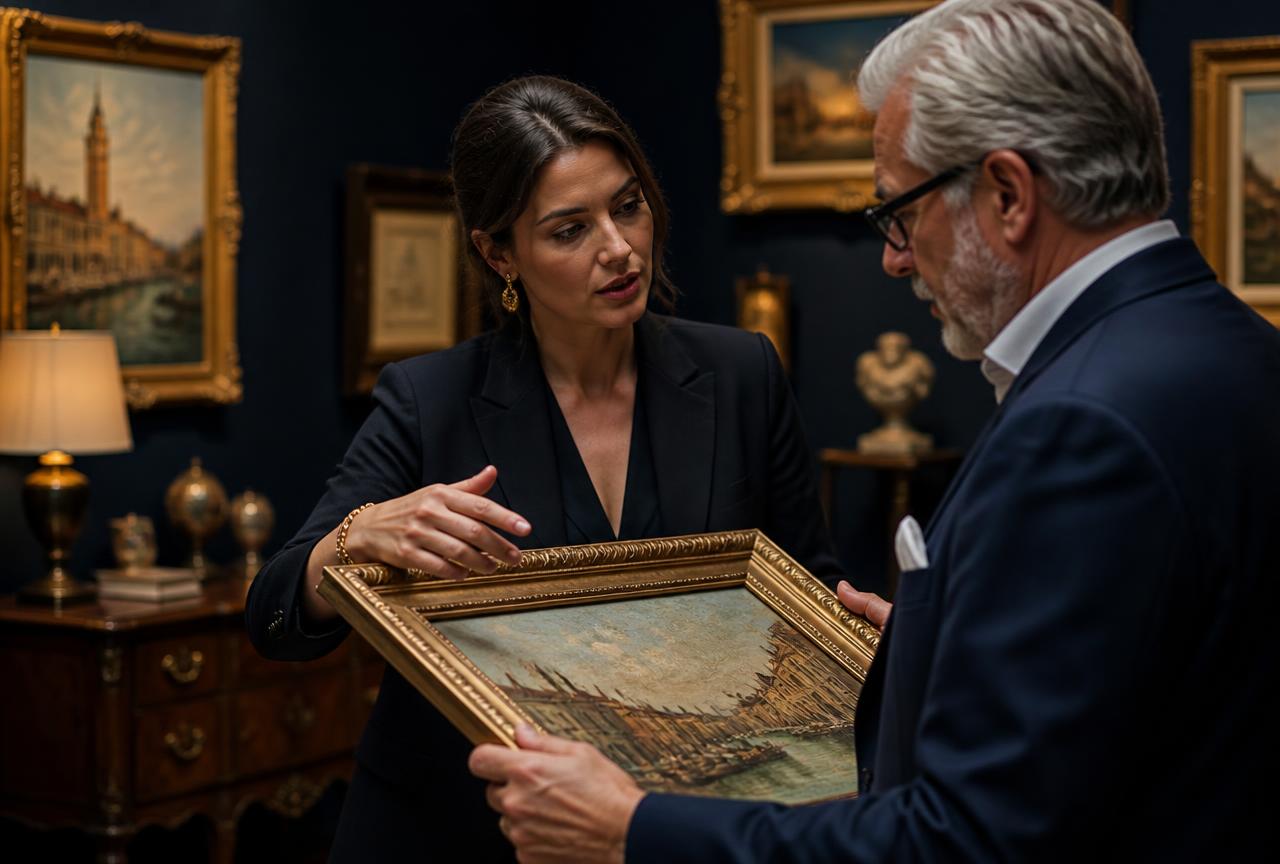
An art consultant helps you decide what to buy, what to pay, and when to sell. In the secondary market — where works change hands privately rather than through a gallery's primary offering — that guidance is the difference between a considered acquisition and an expensive lesson. This guide explains what a consultant does, how consulting differs from advisory, and how to choose one.
Art consulting vs art advisory
The terms overlap, and many professionals use them interchangeably. In practice, art consulting is often used for project-led work: sourcing pieces for a home, office, hotel, or corporate collection, coordinating framing, installation, and lighting. Art advisory tends to describe longer-term counsel on collection strategy, valuation, provenance, and disposal — closer to the work of a financial advisor than an interior specialist.
If your priority is filling a space beautifully, a consultant with strong sourcing and installation experience is right. If your priority is acquiring works that hold cultural and financial value over decades, you want someone whose practice is grounded in the secondary market, auction records, and private-sale comparables.
What a good consultant actually does
Beyond finding attractive works, a serious consultant researches provenance and title, commissions or reads condition reports, checks catalogue raisonné and exhibition history, benchmarks price against recent comparable sales, negotiates on your behalf, and manages logistics, insurance, and documentation. They should also tell you when not to buy.
Questions to ask before you engage anyone
How are you paid — flat fee, retainer, or commission? Do you ever take a margin from the seller as well as a fee from me? Which artists and price bands do you transact in most often? Can you show recent comparables that support this price? Who else has seen this work, and why has it not sold publicly? Clear answers to fee structure and conflicts of interest matter more than a polished presentation.
Independence and conflicts of interest
A consultant who also owns inventory has an incentive to place their own stock. That is not automatically wrong, but it must be disclosed in writing. Independent advisors who are paid by the client alone can compare opportunities across dealers, estates, and auction houses without a preferred outcome.
Why local knowledge matters in South Africa
Blue chip South African artists — Pierneef, Boshoff, Kentridge, Stern, Sekoto and their peers — trade in a market with its own auction rhythm, authentication norms, and buyer base. A globally minded consultant with no reach into Johannesburg and Cape Town networks will miss the off-market works that rarely reach a public catalogue. Ask directly which South African sales and estates your consultant has worked with.
Fees, contracts, and what to expect
Expect a written engagement letter setting out scope, fee basis, confidentiality, and how disputes over authenticity or condition are handled. Fees are commonly a percentage of the transaction value on acquisitions and sales, or a retainer for ongoing collection management. Clarity here protects both sides.
The right consultant makes you a better collector over time: sharper about quality, calmer about price, and more patient about timing. If you would like to discuss a specific acquisition or sale, The Blue Chip Room offers independent advisory grounded in the South African and international secondary market.